
Documentary · 60 min · Swedish & Arabic · In post-production
From Trash to Power
من القمامة إلى القوة
Sweden's world-leading biogas technology meets Syria's urgent energy needs — a journey from Småland innovation to a unique social experiment in Damascus. Made for Arabic-speaking audiences across the MENA region.
About the film
Waste, energy and social change.
This documentary aims to show how Sweden turns food waste into energy through a structured and sustainable system. It will highlight each step — from household sorting to transportation, biogas production, and re-use as electricity or fuel.
The film is primarily aimed at Arabic-speaking audiences, to raise awareness and inspire sustainable solutions in the MENA region.
Scientific anchor: Linnaeus University — Dr. Joacim Rosenlund, scientific anchor & fact checker. The project also generates unique research data on the social acceptance of environmental technology in extreme environments.
Filming Sweden — completed
Filming Syria — completed
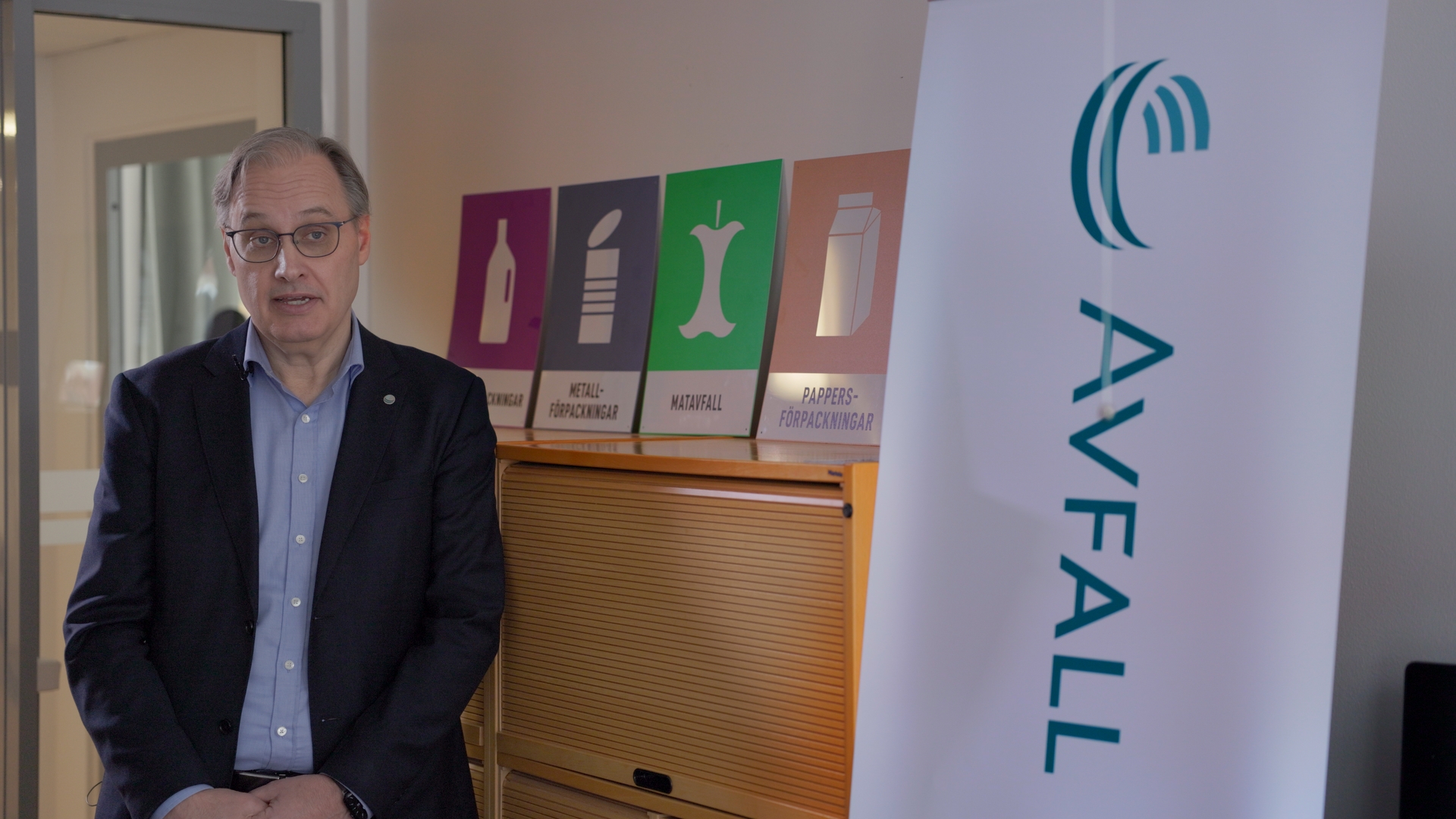
Final interview (Tony Clark, Malmö) — planned
Post-production — ongoing
- Concept, research & presenter
- Lina
- Director & cinematography
- Jahja Alkhatib
- Production company
- Synas Media AB
News from Syria · autumn 2026
Filming in Syria is done.
In late summer 2026 we filmed in Damascus: an experiment in an apartment building, a major trade fair and several interviews. We are now editing the film.
-
30 Aug – 5 Sep 2026
The experiment in Damascus
One apartment building in Damascus got two bins: one for food waste and one for everything else. For a week, the neighbours sorted at home, and we filmed the whole week. How it went, you will see in the film.
-
1 Sep 2026
Damascus International Fair
At the fair we filmed the XP campaign, where young volunteers teach visitors to sort waste using points and big screens.
-
7 Sep 2026
Omar Al-Hamawi, Damascus city
Deputy head of local development. He explains why there is no system yet, and why he starts with knowledge and young people anyway.
-
Interview
Qais Al-Amir
An industrial control engineer in oil and gas. He argues the opposite: plants, transport and laws must come first, and people follow once they see it works.
-
After the week
Nisreen, a mother in the building
One of the neighbours in the experiment building describes the week in her own words.
-
November 2026
Lina
The film's originator and presenter is interviewed herself: where did the idea come from, and what is she most afraid of?
-
Next step
A final interview with Tony Clark
We are planning a final interview with Tony Clark, CEO of Avfall Sverige, in Malmö. Then the edit will be completed.
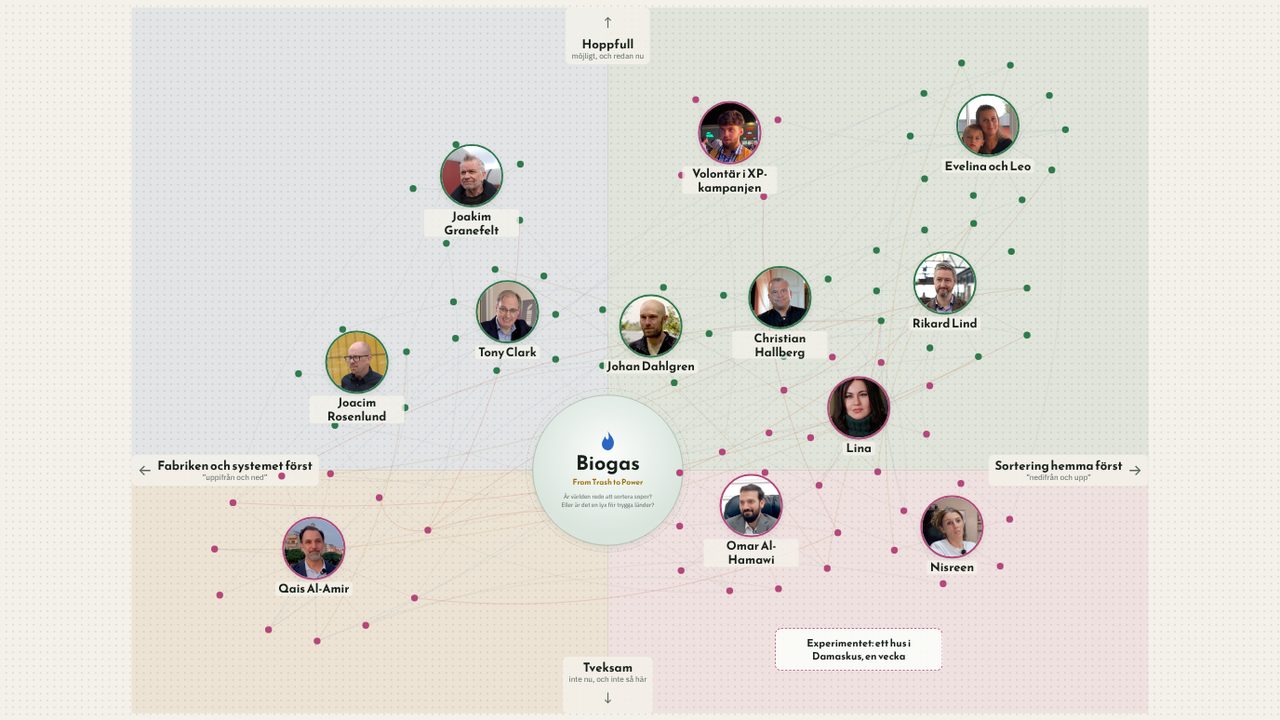
Idea map
Every voice on one map.
Twelve voices from Sweden and Syria – and they do not agree. Should change start at home or at the plant? Are they hopeful or doubtful?
On the idea map, each person stands where their ideas place them. Click a person or a quote to see where they agree and where they contradict each other.
The map does not reveal how the experiment turned out. That is for the film. The map is available in Swedish and Arabic.
Interviews
Who we've interviewed.
In Sweden
- Tony Clark — CEO of Avfall Sverige (the Swedish Waste Management association)
- Rikard Lind — Chairman of the Board of N.S.R.
- Joakim Granefelt — Alvesta Biogas
- Johan Dahlgren — Stockholm Vatten & Avfall
- Joacim Rosenlund — Linnaeus University
- Christian Hallberg — Gästgivaregården Ljungby
- Local families — Swedish households
In Syria
- Omar Al-Hamawi — Deputy Head of Local Development, Damascus Governorate
- Qais Al-Amir — industrial control, oil and gas sector
- XP campaign volunteers — Damascus International Fair
- Nisreen — a mother in the experiment building, Damascus
- Lina — originator and presenter of the film
Supported by

Interested — as a broadcaster, distributor or partner?
We reply within 24 hours, in English or Arabic.